


















Here's the uncomfortable truth about running a small business website in 2026: the bot poking at your login page right now is probably smarter than the one that hit Fortune 500 companies five years ago. Attackers have gotten their hands on the same AI tools that are helping legitimate security teams automate their work, and they're pointing them at everyone, not just the big fish.
The good news? You don't need a six-figure security budget to fight back. AI-powered defenses have become genuinely affordable, and a lot of the heavy lifting can be handled by your hosting provider and a couple of well-chosen plugins. Let's walk through what's actually happening out there and what you can do about it without losing sleep.
Why Small Sites Are Now Prime Targets
For years, the assumption was that hackers chased big targets because that's where the money lived. That logic still applies, but here's what changed: AI made scanning cheap. When an attacker can spin up an automated tool that probes 10,000 WordPress sites an hour for known vulnerabilities, your low-traffic bakery website becomes just as interesting as anyone else's. You're not being singled out. You're being swept up.
These AI-driven scanners are doing things that used to require a human pen-tester. They identify your CMS version, fingerprint your plugins, test for outdated themes, and even attempt context-aware password guesses based on your business name, location, and publicly available info. It's enterprise-grade probing aimed at sites that were never designed to withstand it.
The attacks themselves have also evolved. Instead of brute-forcing logins with generic password lists, modern bots try patterns that match how real humans actually create passwords. They time their requests to avoid triggering rate limits. They rotate IPs. If you're relying on the same security setup you put in place in 2022, you're bringing a flip phone to a smartphone fight.
The Defender's Side: AI Is on Your Team Too
Here's the flip side of this story, and it's actually pretty encouraging. The same AI capabilities that make attacks more sophisticated are powering a new generation of defensive tools, and the price point keeps dropping. Security plugins that cost hundreds of dollars a month two years ago now have free or low-cost tiers that genuinely work for small businesses.
Modern AI-powered security tools can spot behavioural anomalies rather than just matching known attack signatures. That means they catch new threats the moment they appear, not weeks later when someone adds them to a blocklist. They watch for unusual login patterns, sudden file changes, weird database queries, and traffic that just doesn't look right. When something fishy happens at 3am, the system blocks it and flags it without you ever knowing there was a problem.
Managed scanning at the hosting level adds another layer. At TPC Hosting, we've leaned into this approach because honestly, expecting every small business owner to become a part-time security analyst isn't realistic. The infrastructure should catch most of the noise before it ever reaches your site, so your plugins only have to handle the edge cases.
Practical Steps You Can Take This Week
Let's get concrete. Here's what actually moves the needle for a small business site in 2026, in roughly the order I'd tackle it:
- Turn on two-factor authentication for every admin account. This single step blocks the vast majority of automated login attacks, full stop.
- Install an AI-aware security plugin like Wordfence, Solid Security, or MalCare. The free tiers are surprisingly capable now, and the paid versions are cheaper than a monthly streaming bundle.
- Keep everything updated automatically. Plugins, themes, core CMS. Most successful attacks exploit vulnerabilities that were patched months ago.
- Use a web application firewall (WAF). Cloudflare's free tier works for most small sites, and many hosts include WAF protection by default.
- Audit your plugins. Every plugin is a potential door. If you're not using it, delete it, don't just deactivate it.
- Set up automated backups stored somewhere off your server. When something does go wrong, a clean backup turns a disaster into an inconvenience.
None of this is rocket science, but the difference between sites that get compromised and sites that don't usually comes down to whether someone actually did the boring basics. AI attackers exploit complacency more than they exploit clever zero-days.
Choose a Host That Treats Security as Default
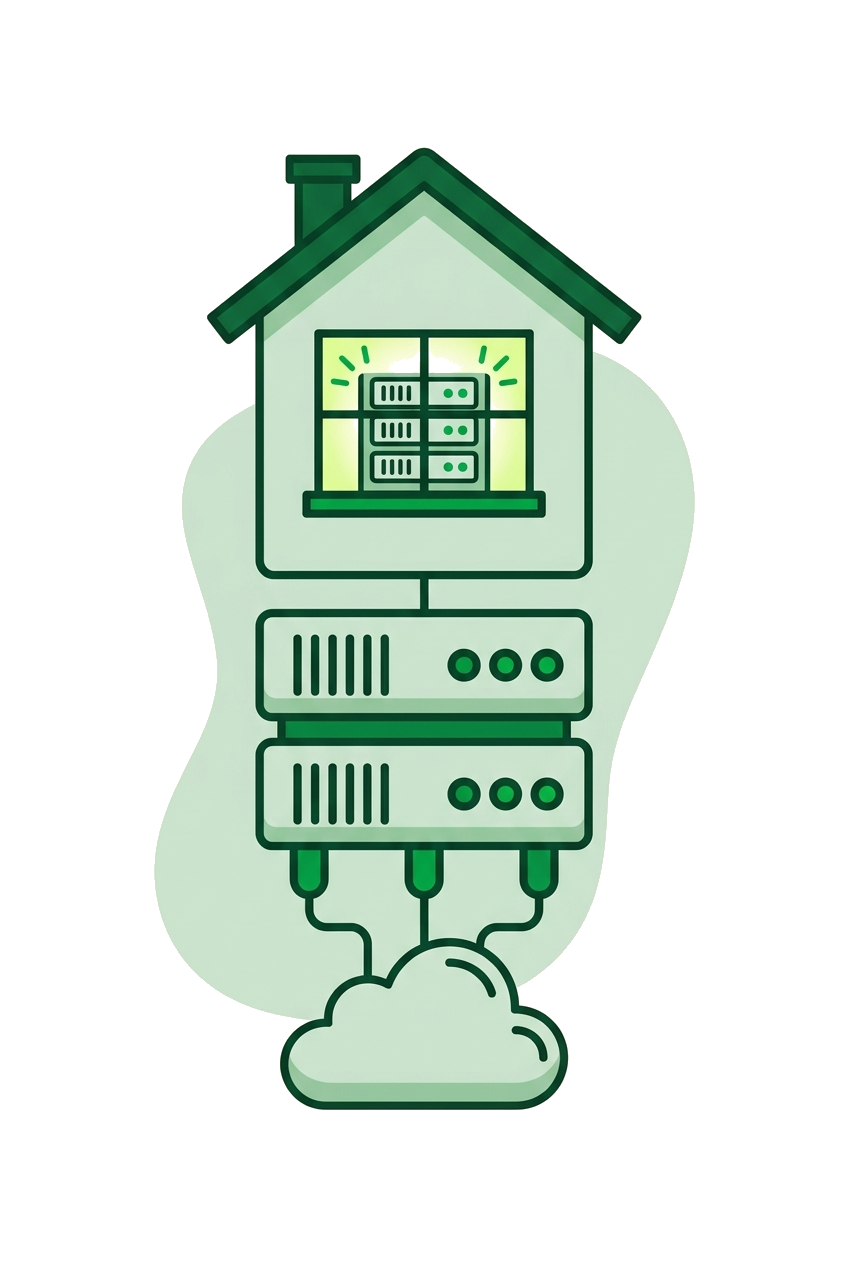
One thing we've learned watching this arms race play out: a lot of security depends on stuff that happens before traffic ever reaches your site. Server-level malware scanning, automatic patching, intrusion detection, isolated environments so one compromised site can't infect its neighbours. This is the layer most small business owners can't realistically manage themselves, and it's exactly where your host should be earning their keep.
When you're evaluating hosting, ask the hard questions. Do they run automated malware scanning? Is there a WAF included? How fast do they patch the underlying stack when a CVE drops? Do they isolate accounts? If the answers are vague or the security features cost extra, that's a signal. We built TPC Hosting around the idea that security shouldn't be an upsell. The baseline should be solid for everyone, and the premium tiers should add convenience, not basic protection.
The bottom line: AI has changed the game, but it hasn't rigged it against small businesses. With sensible defaults, a couple of smart tools, and a host that takes security seriously, your site can absolutely hold its own against the new wave of automated threats. You don't need to outrun every attacker in the world. You just need to be a harder target than the next site down the list.
FAQ
Are AI-powered attacks really targeting small business sites?
Yes, but not in a personal way. Automated AI scanners probe thousands of sites per hour looking for any vulnerable target. Your size doesn't make you safe, it just means you're part of a much bigger sweep.
Do I need to pay for an expensive security plugin to be protected?
Not necessarily. Free tiers of plugins like Wordfence or Solid Security combined with good hosting-level protection cover most small business needs. Paid plans add convenience and faster scanning, but the basics are accessible to everyone.
What's the single most important thing I can do today?
Enable two-factor authentication on all admin accounts and turn on automatic updates for your CMS, plugins, and themes. These two steps alone block the overwhelming majority of automated attacks.