






















If you've ever tried running Odoo, Dolibarr, Bagisto or any other business app on cheap shared hosting, you already know how that story ends. Pages crawl, reports time out, and someone in accounting is messaging you at 9pm asking why the system is down again. ERP and internal tools are not blogs or brochure sites. They're working software that your team depends on every single day, and they need hosting built for that job.
The good news: you don't need a giant enterprise contract or a full-time sysadmin to get this right. You just need to understand what actually matters and pick a host that takes those things seriously. Let's break it down in plain language so you can make a confident choice for your business.
Why Shared Hosting Falls Short for ERP
Shared hosting is designed for lightweight websites. You're sharing CPU, memory and disk with hundreds of other accounts, and the resource limits are tight on purpose. That's fine for a small WordPress site, but ERP systems like Odoo or Dolibarr are a completely different beast. They run constant database queries, generate PDFs, sync with email, talk to payment gateways, and often handle dozens of logged-in users at once.
When all that traffic hits a shared environment, things get ugly fast. Background jobs queue up, invoices take ages to load, and Bagisto's product catalog can grind to a halt during a busy sales day. You're not doing anything wrong, you've just outgrown the tool. ERP needs guaranteed resources, not best-effort scraps.
The other hidden problem is PHP and database tuning. ERP apps usually need higher memory limits, longer execution times and specific database configurations. Most shared hosting won't let you change any of that, so you're stuck with defaults that simply weren't designed for business software.
The Resources That Actually Matter
For a small to medium business running Odoo, Dolibarr or Bagisto, the magic ingredients are dedicated CPU, generous RAM, fast SSD storage and a properly configured database. As a rough guide, even a small Odoo install with 5-10 users wants at least 2 vCPU and 4GB of RAM to feel responsive. Bagisto with a real product catalog wants similar. If you're planning to grow, build in headroom from day one rather than scrambling to upgrade mid-quarter.
Storage speed matters more than people realise. ERP databases do a lot of small reads and writes, so NVMe SSD storage makes a noticeable difference compared to older spinning disks or even basic SSDs. The same goes for the network: if your team is uploading invoices, attachments and product images all day, slow I/O turns into wasted hours.
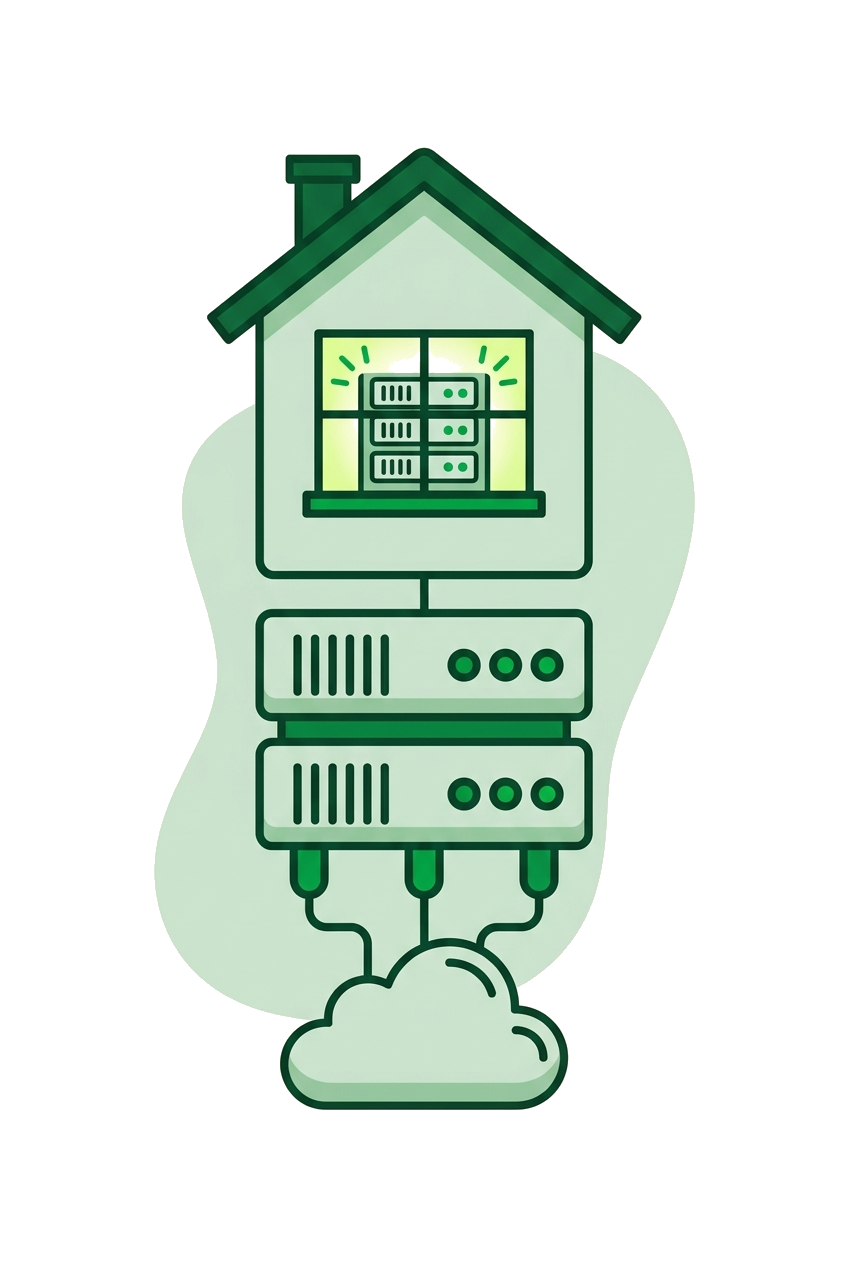
You also want a host that lets you scale without rebuilding everything. A VPS or managed cloud setup, like the ERP-focused plans at TPC Hosting, gives you the option to add CPU or RAM as your team grows, without migrating to a new server every year.
Uptime, Backups and Not Losing Your Mind
When your website is down for an hour, it's annoying. When your ERP is down for an hour, your warehouse stops shipping, your sales team can't quote, and finance can't close the day. Uptime stops being a marketing number and becomes a real business metric. Look for a host that publishes a clear uptime commitment (99.9% or better) and actually runs proper monitoring, not just a status page nobody updates.
Backups are where many SMBs get caught out. A weekly backup is not enough for an ERP. You want daily automated backups, kept for at least a couple of weeks, stored separately from your main server, and easy to restore. If a bad import wipes out 200 customer records on Tuesday afternoon, you want to roll back to Tuesday morning, not last Sunday.
Test your restores too, or pick a host that does it for you. A backup you've never restored is just a hopeful guess. The whole point is that when something goes wrong (and one day it will), you can get back to work in minutes instead of days.
EU Data Residency and GDPR Without the Headache
If you're based in Europe or serving European customers, where your ERP data physically lives is not a small detail. ERP systems hold customer records, invoices, employee data and supplier information, exactly the kind of personal data GDPR cares about. Hosting that data in the EU, on infrastructure run by an EU company, makes your compliance story a lot simpler.
It also makes legal reviews easier. Your DPO, your auditors and your enterprise customers will all ask the same question: where is the data? Being able to answer "in an EU data centre, with an EU provider, under EU law" closes that conversation quickly. TPC Hosting keeps ERP workloads on EU infrastructure for exactly this reason.
Beyond residency, look for sensible security basics: free SSL, firewalls, isolated environments, and clear policies on who can access your server. None of this is exotic, but it's the difference between sleeping well and lying awake wondering who has your customer database.
What to Look For in an ERP Host
To keep it simple, here's what actually matters when you're choosing hosting for Odoo, Dolibarr, Bagisto or any similar internal tool:
- Dedicated resources: VPS or managed cloud, not crowded shared hosting.
- Headroom to grow: easy upgrades on CPU, RAM and storage.
- Daily backups: automated, off-server, and genuinely restorable.
- Strong uptime: 99.9% or better, with real monitoring behind it.
- EU data residency: servers and provider both inside the EU for GDPR.
- Real human support: people who understand ERP, not just generic hosting tickets.
Get those right and your ERP stops being a daily worry and goes back to being what it's meant to be: a tool that quietly runs your business in the background.
Frequently Asked Questions
FAQ
Can I run Odoo or Dolibarr on regular shared hosting?
Technically sometimes, practically no. Shared hosting limits CPU, memory and execution time in ways that ERP apps quickly run into. You'll see slow pages, timeouts and failed background jobs. A VPS or managed ERP plan is a much safer choice from day one.
How much RAM and CPU does my ERP really need?
For a small team of 5-10 users on Odoo, Dolibarr or Bagisto, plan for at least 2 vCPU and 4GB of RAM as a starting point. Heavier use, more modules or larger product catalogs push that higher. Always leave room to scale up rather than running at the limit.
Why does EU data residency matter for ERP hosting?
ERP systems hold personal data like customer details, invoices and employee records, all covered by GDPR. Keeping that data on EU servers with an EU-based provider makes compliance, audits and customer due diligence much simpler than dealing with cross-border data transfers.